Bishopthorpe
The RadleysBishopthorpe is the village where the Radley family's concealed vampire life intersects with the ordinary routines of neighbors, gossip, and small-town commerce. Its quiet lanes and respectable appearance offer a convincing disguise, but the place is neither as peaceful nor as self-sufficient as it imagines itself to be. For the Radleys, it is home; for their neighbors, it is a close-knit community in which odd incidents accumulate into suspicion; and for the young, it can feel like a place with too few ways out.
Setting and Physical Form
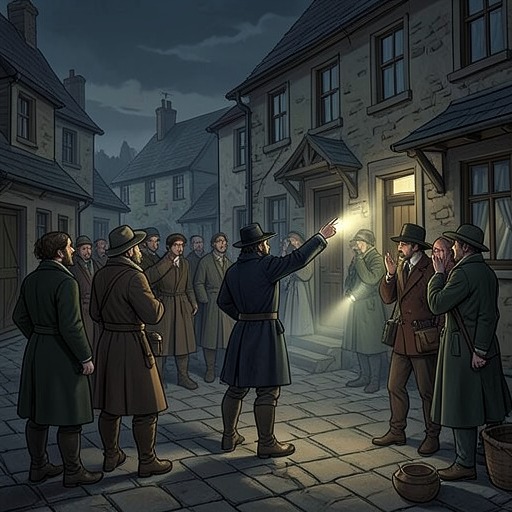
At three o’clock in the morning, Bishopthorpe seems to affirm its residents’ belief that it is a village of good, quiet people living good, quiet lives. The nighttime soundscape is sparse: an owl, a distant dog, and wind moving through sycamore trees. Even on the main street, traffic is rare, and the former post office’s abusive graffiti is difficult to make out in the dark. The calm is not simply an objective description of the village; it is also the appearance that allows a family of vampires to live among its residents without being recognized for what they are.
Orchard Lane sharpens that contrast. Its detached period houses belong to solicitors, doctors, and project managers, and at night their dark windows and drawn curtains give the street a secluded, orderly aspect. Number 17 breaks that pattern with light showing through an upstairs curtain. The small visual difference turns an ordinary domestic street into a place of concealed activity, where the appearance of privacy does not mean that nothing is happening inside.
On a map, the village resembles a fish skeleton: the main street forms its backbone, while narrow lanes and cul-de-sacs branch away from it. The shape suggests a settlement organized around one central route but offering few onward destinations. Bishopthorpe is large by village standards, yet its branching layout does not translate into a broad range of local choices. To Rowan Radley and Clara Radley, it feels like a half-place, connected to elsewhere by buses and the internet rather than able to satisfy all the needs of its residents itself.
Shops, Services, and the Village’s Self-Image
Bishopthorpe’s main street contains a strikingly mixed collection of businesses. The refined Hungry Gannet delicatessen stands beside Fantasy World, a novelty costume shop whose window display gives it an ambiguous appearance and which also has a back room selling novelty adult toys. The juxtaposition captures the village’s uneven character: niche enterprises occupy the same limited strip without forming a coherent local commercial life.
The village has no post office, and neither the pub nor the fish-and-chip shop does the trade it once did. A drugstore stands next to the clinic, while a children’s shoewear shop and Fantasy World draw customers travelling in from York or Thirsk. These businesses provide some services, but the wider pattern is dependence rather than self-sufficiency. Even the main street’s assortment of shops cannot make Bishopthorpe the complete, bustling community its picturesque image implies.
That image is itself a kind of costume. The village regards itself as the epitome of a quaint English settlement, while the narration presents it as a place that disguises its limitations beneath a more attractive surface. Rowan and Clara’s sense of being hemmed in connects the village’s physical layout to the pressure of deciding whether to fit an expected role or acknowledge a less comfortable truth. Bishopthorpe’s appearance is therefore not merely scenic: the gap between what it claims to be and what it is echoes the Radleys’ own effort to pass as an ordinary family.
Neighbors, Gossip, and Concealment
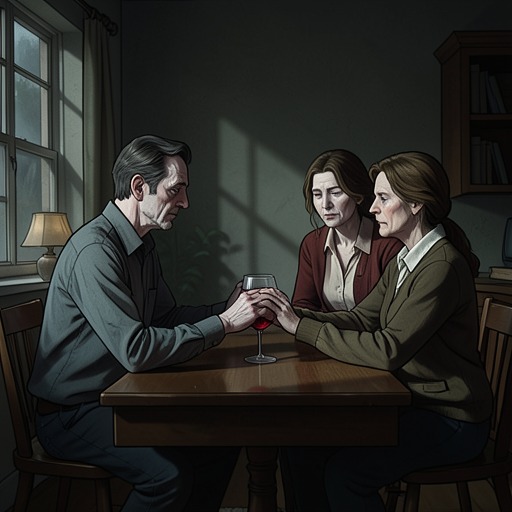
The Radleys’ neighbors at 19 Orchard Lane do not initially understand that they live beside vampires, though years of discordant incidents leave them with a sense that the family is odd. Helen Radley once painted Lorna Felt’s portrait and abruptly left the room after helping her; at a barbecue, Mark Felt found Peter Radley in the kitchen eating a piece of raw fillet steak. Mark explained away his suspicions through assumptions about the Radleys’ former life in London, while Lorna offered an explanation for Toby Felt’s distrust based on his parents’ separation. The incidents remain fragments rather than proof, but in a village where people observe one another, fragments can linger.
Bishopthorpe differs from London in the visibility of ordinary life. Peter Radley recalls that in Clapham nobody on his street knew him well or cared to ask how he spent his leisure time. In Bishopthorpe, gossip is a constant presence, even when it falls quiet in his vicinity. When the Radleys first moved to Orchard Lane, before Helen Radley’s pregnancy was visible, residents wanted to know why a young, childless London couple had chosen a quiet village. The family had explanations ready, including a partly true wish to be closer to Helen’s seriously ill father. Their arrival thus began under the village’s attention, before their secret was understood.
That attention has consequences for the children. Watching them struggle to make friends and Rowan Radley become a target for bullying, Peter Radley and Helen Radley considered homeschooling. It might have given Rowan a life in constant shade and kept him away from bullies, but Helen opposed the plan, recalling the abstainer handbook’s insistence on integration. Staying among other people could not protect the children from gossip or from classmates who might provoke an overwhelming blood-thirst episode. The village’s social closeness offers contact, but not safety.
A Place Where Private Trouble Becomes Public
Bishopthorpe’s gossip grows more dangerous when local events begin to draw public attention. On a Monday morning, Peter Radley hears people discussing a boy from Farley after news of the case has appeared on local television. The scene places private fear inside an ordinary setting: Peter is in a reception area, handling mail and appointment sheets, while the conversation reaches him as part of the day’s routine. The village and its surrounding area do not keep troubling events at a distance for long; they become talk that neighbors can carry into workplaces and homes.
The streets also become a setting for watching and waiting. Alison Glenny observes Rowan Radley walking up the street and recognizes someone approaching him from behind a laburnum tree. Elsewhere, Jared Copeland hides in bushes on Orchard Lane for more than an hour, hoping to confirm that Helen Radley will kill Will Radley. He sees Will leave the house, enter the camper van, and then fly away. Jared is left in the same village as Will but unable to stop him. The familiar lane has become a surveillance point, yet proximity does not give Jared power over what happens.
Bishopthorpe also offers places where the characters’ private anxieties briefly meet ordinary public space. Walking along the main street beneath a bright sun, Rowan Radley realizes he has not applied enough sunblock. Instead of going home, he sits on a partly shaded bench beside the war memorial and reads its inscription to the glorious dead. He wonders what awaits a vampire after death. Eve Copeland then approaches from the bus shelter where she has been hiding. The meeting brings his fear of what he is together with the person whose response matters to him, in a setting that belongs to village life rather than to the hidden world he is trying to understand.
Home Ground and Narrative Significance
By the final confrontation, the Radley home and its garden are no longer merely sheltered domestic spaces. Rowan Radley carries Will Radley over the roof and down toward the pond, where he holds his father beneath the water. The house’s familiar surroundings become the terrain of a struggle between them. Rowan knows that Will’s long history of drinking blood gives him greater power and stamina; in that moment, the village home cannot make the conflict safe or contain it within an ordinary family life.
Bishopthorpe consequently works through repeated contrasts: quiet streets against concealed danger, quaintness against commercial decline, neighborly closeness against isolation, and the appearance of an ordinary home against the violence that reaches its garden. The village is both a disguise and a trap. It lets the Radleys live among people who do not fully understand them, but its gossip and shared routines keep bringing private actions into view. Its limited routes outward make the desire to escape palpable, while its lanes, shops, bus shelter, memorial, and homes repeatedly draw the story’s characters back into contact.